MKOS
Polski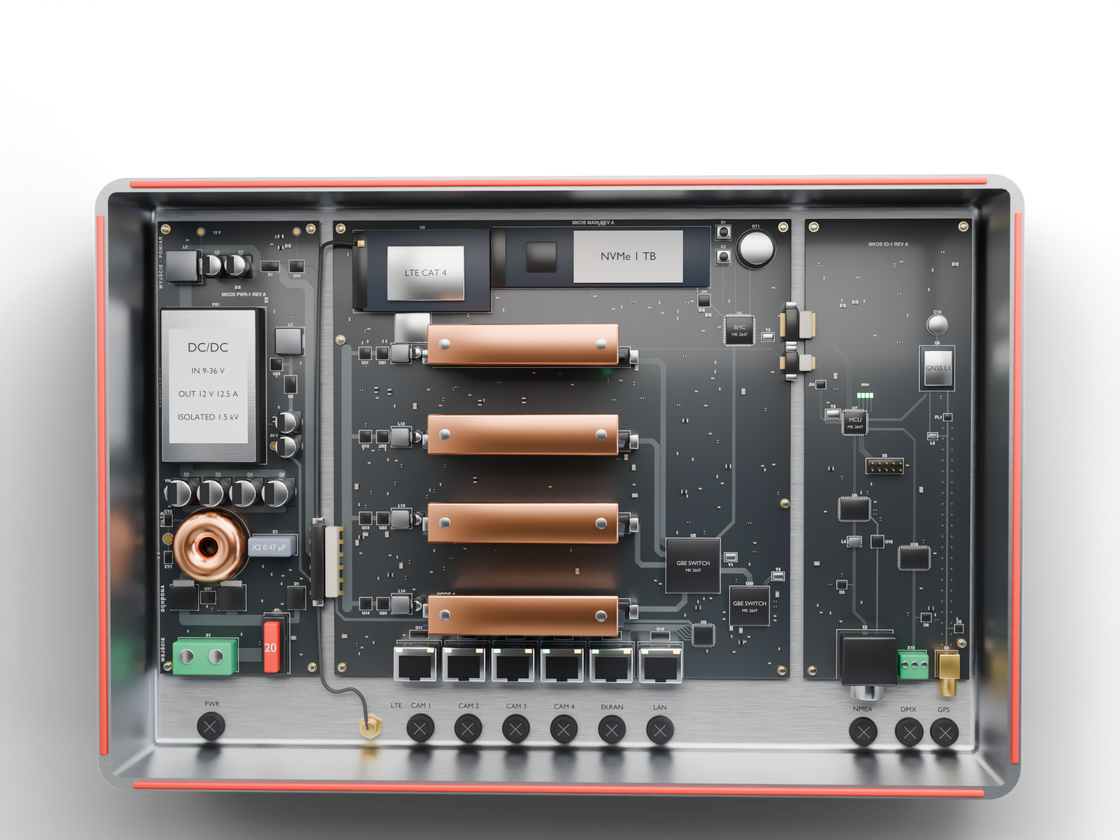
One computer for the whole yacht.
Engines, cameras, lights, audio and films on one screen at the helm. One aluminium box with no fans does all the computing.
Monolith
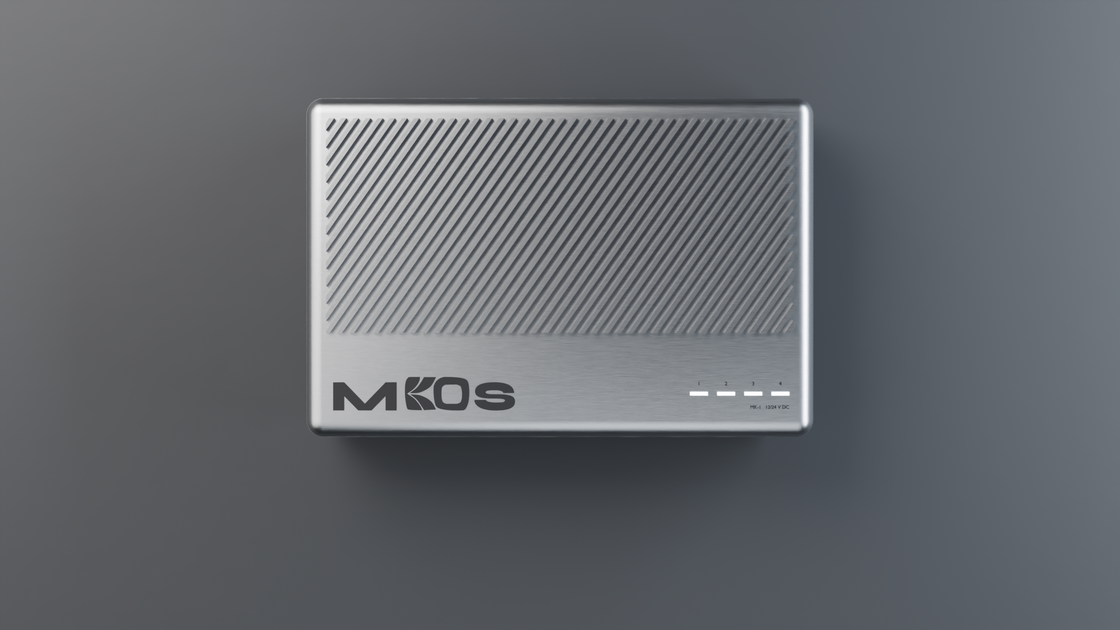
A single block of brushed aluminium, 320 × 214 × 70 mm. No fans and no visible screws. The yacht’s cables come in from the wall, through the back of the unit, so none of them shows from outside.
The front is the heatsink
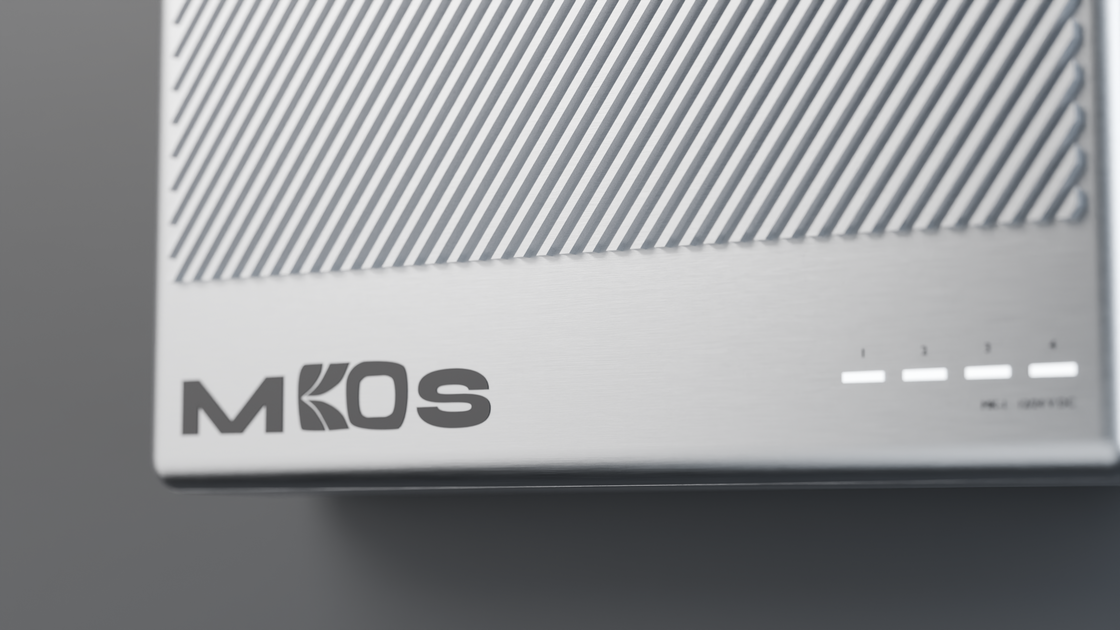
The slanted fins pass the heat of the modules straight to the air. A gasket runs under the front all the way round: salt mist has no way in.
What is inside
1 / 13
Keep scrolling, or tap a number on the unit.
02Systems
Four modules.
Five systems.
The screen is separate and touch-operated. The box hangs in a dry locker and a single cable runs to the helm.
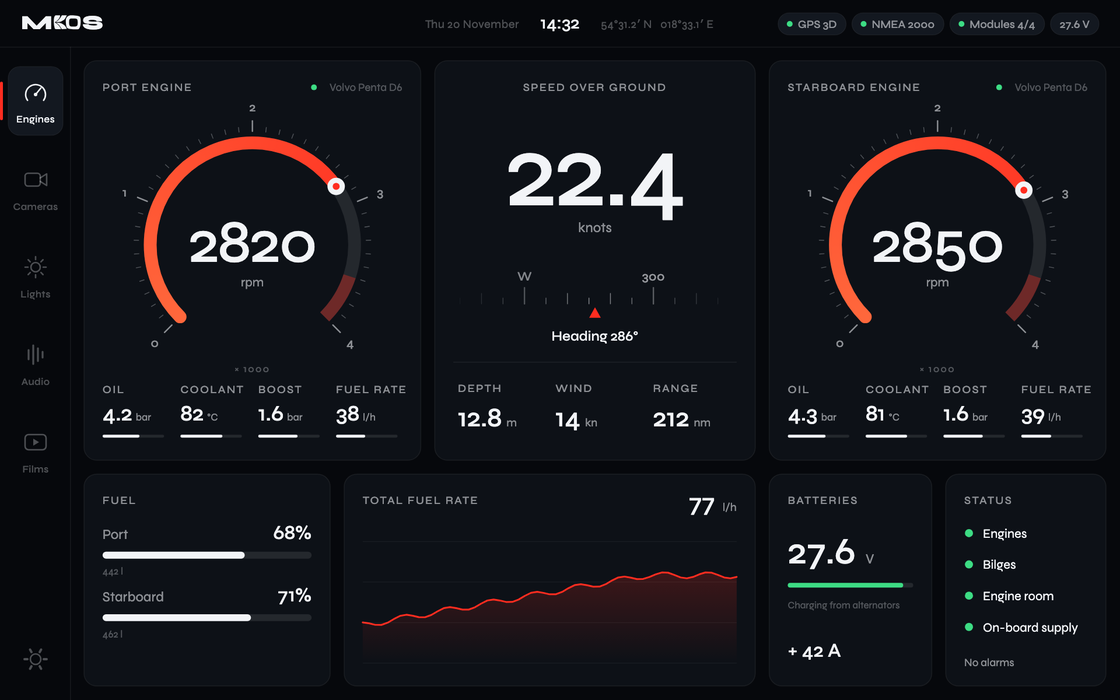
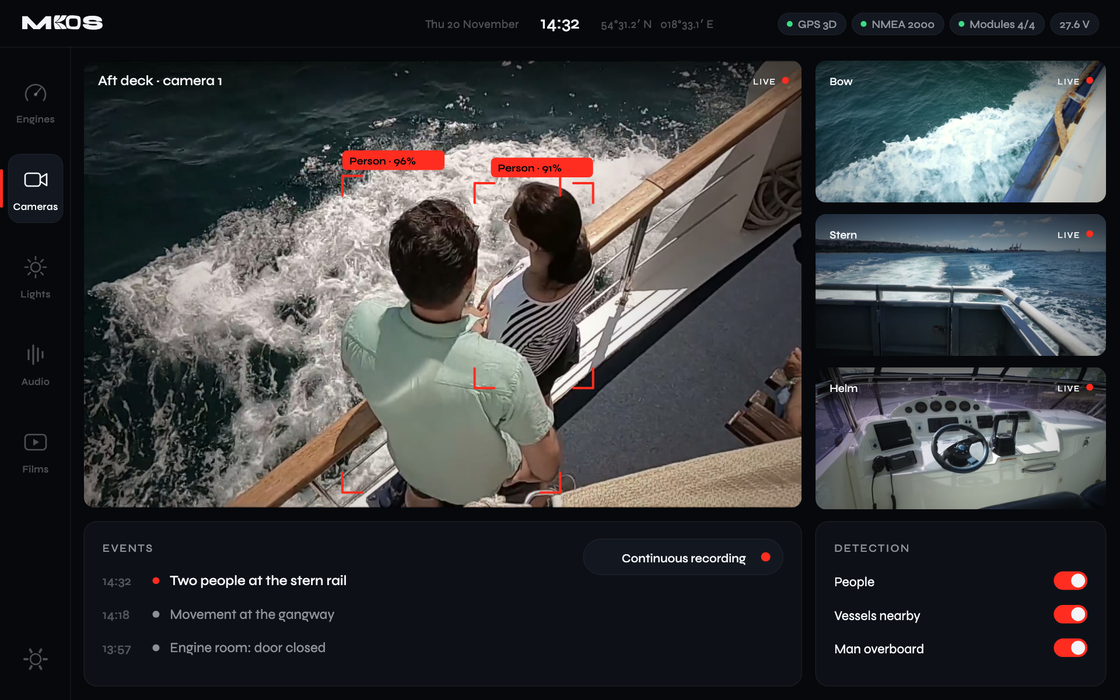
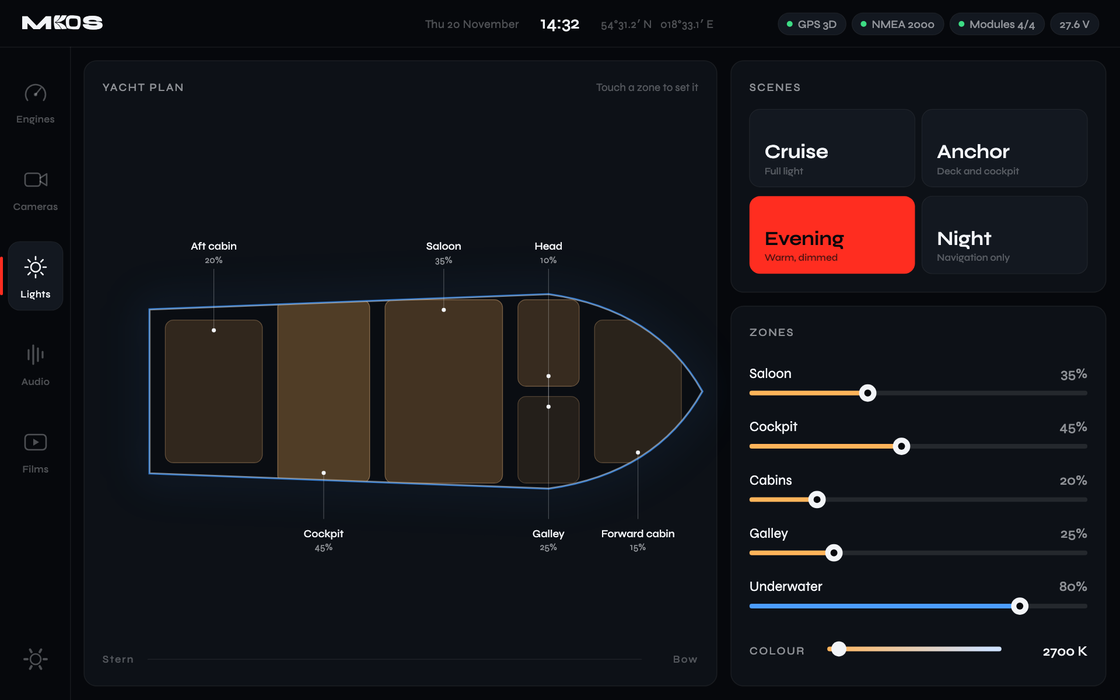
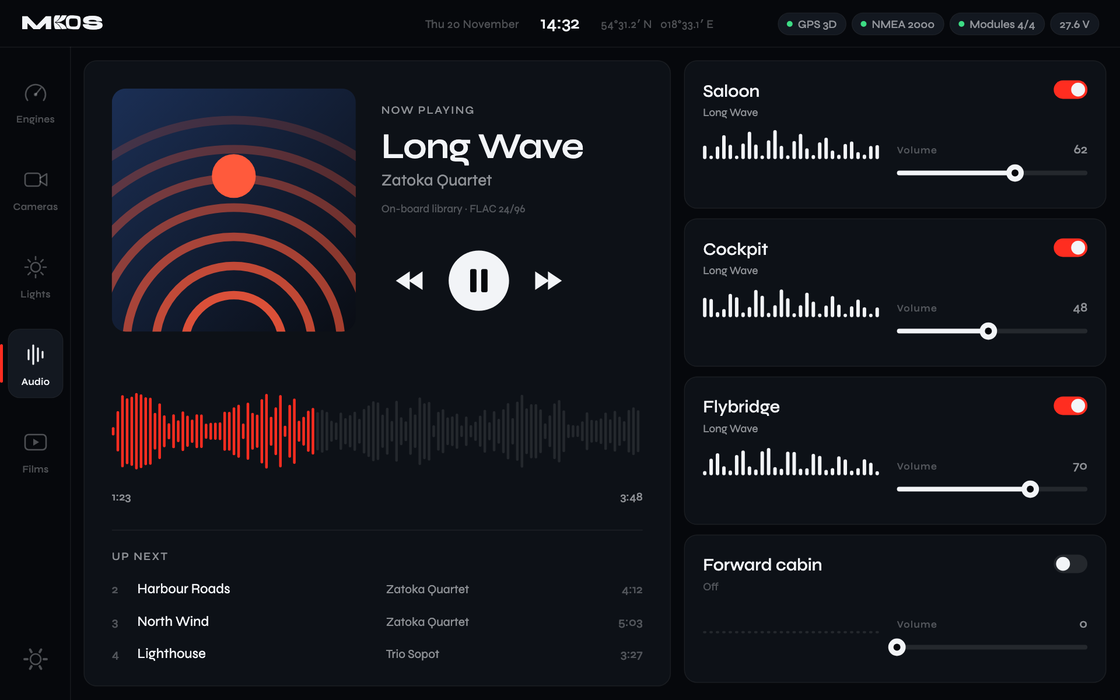
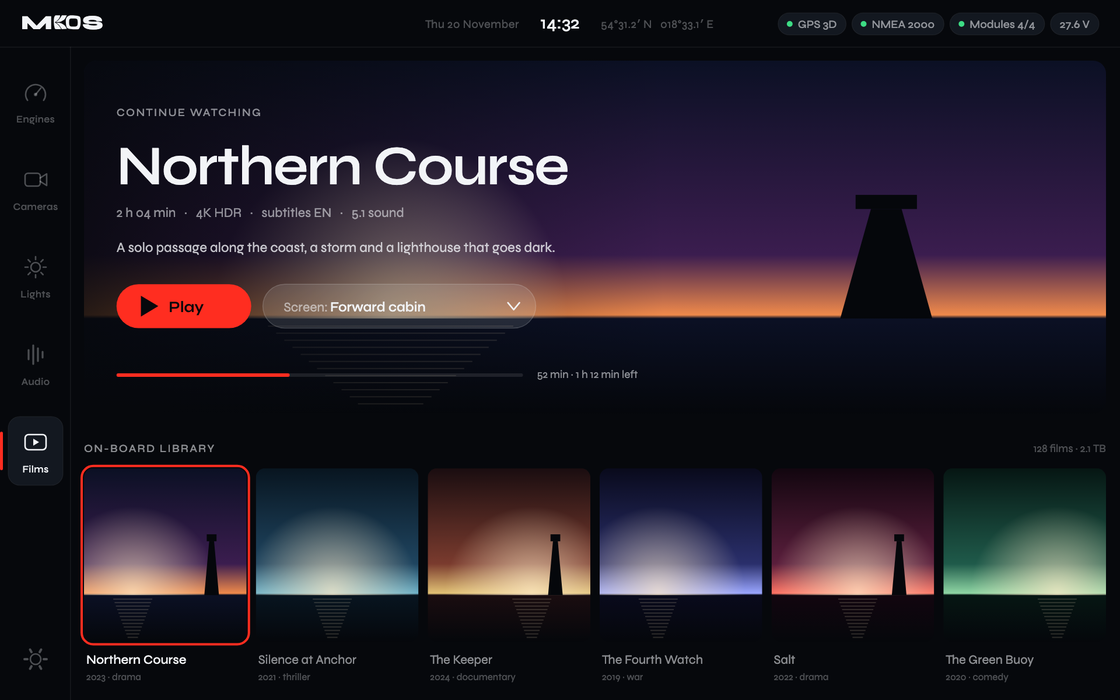
The data, titles and figures on the screens are examples.
03Engines
Volvo Penta engines.
Read only.
The D4, D6 and D8 engines have their own electronic bus, EVC. MKOS does not tap into it directly: the data leaves through an EVC → NMEA 2000 gateway, the open marine standard, and only from there reaches the unit.
MKOS shows the data, but it does not control the engine or replace the factory gauges. With D2 engines it depends on the year: newer ones, with the MDI box, connect through a gateway, while older ones need a converter for analogue sensors.
| Data | Unit |
|---|---|
| 01Revs | rpm |
| 02Oil pressure | bar |
| 03Coolant temperature | °C |
| 04Boost pressure | bar |
| 05Fuel rate | l/h |
| 06Voltage | V |
| 07Engine hours | h |
04The unit
One block of aluminium.
No fans.
- 4Jetson Orin Nano modules
- 0fans
- 150 Wisolated power
- 10sealed cable glands
- Size
- 320 × 214 × 70 mm
- Case
- aluminium, passive cooling
- Board
- custom main board, sockets as in Turing Pi 2
- Modules
- 4 × Nvidia Jetson Orin Nano
- Power
- 12 or 24 V from the yacht’s supply
- Connections
- power, NMEA 2000, DMX, GPS and LTE antennas, 4 × PoE camera, screen, yacht network
These are design assumptions, not the figures of a finished product.
05Questions
Questions
Can I buy MKOS?
No. It is a concept project from Box KO Lab: it shows what one computer for a whole yacht could look like. The unit does not exist physically and has no tests or marine certificates.
Does MKOS control the engines?
No. It reads data over NMEA 2000 and shows it. Control and the factory gauges stay with Volvo Penta.
What happens when one module stops working?
Its light on the front goes out and one function disappears, the cameras for example. The other modules work independently, so the engine data stays on the screen.
Where does the picture in the cameras view come from?
It is free footage from Pexels, used as an example. The people detection frames are placed by hand.